Running costs
What a home espresso machine actually costs per cup
Work out the real cost of a home espresso: the machine spread over its life, the beans per shot, the electricity, and the descaling you cannot skip.
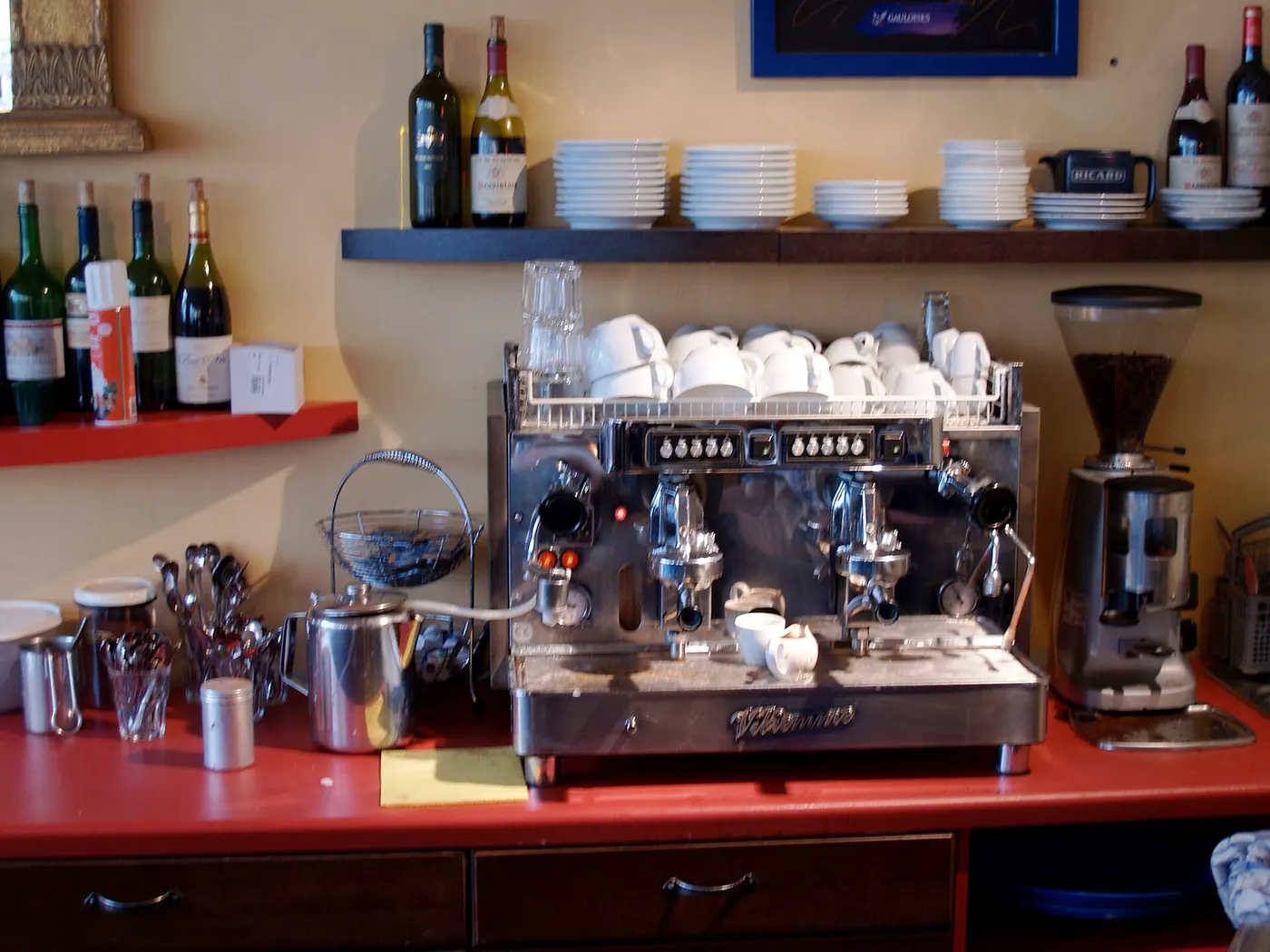
A machine's price tag answers the wrong question. What you pay per cup depends on three numbers the shelf label never shows: how long you keep the machine, how many cups you pull from it, and what you spend on beans, water filters and descaler along the way.
This guide works through each of them in order, with the arithmetic in front of you, so you can put your own figures in and see which part of the total actually moves. Every example figure below is labelled as an example; prices change weekly and differ by seller.
The machine is the small number, if you keep it
Spreading the purchase over the cups you will pull is a single division, and it is the part people get most wrong. A machine bought for $700 and kept for 5 years, used twice a day, covers 3,650 shots. That is about 19 cents of machine per cup. The same machine replaced after 18 months covers 1,095 shots, which is about 64 cents a cup — more than three times as much, for exactly the same equipment.
This is why the honest question is not 'is this machine worth $700' but 'will I still be using this in five years'. A machine with a serviceable pump, a standard group size and available gaskets can reach that; a sealed unit with no parts supply usually cannot, whatever it cost.
Resale changes the figure too. If you sell the machine for $200 after five years, the machine's share of each cup falls from 19 to about 14 cents. The cost-per-serving calculator on this site takes a resale figure so you can see that directly.
| Machine price | Kept 2 years | Kept 5 years | Kept 8 years |
|---|---|---|---|
| $300 | $0.21 | $0.08 | $0.05 |
| $700 | $0.48 | $0.19 | $0.12 |
| $1,500 | $1.03 | $0.41 | $0.26 |
Each cell is price divided by (2 x 365 x years), with no resale subtracted. Put your own numbers into the cost-per-serving calculator to include resale and consumables.
Beans are where the money goes
A double shot uses roughly 18 g of coffee. A 340 g bag therefore yields about 18 doubles. At an example bag price of $18, that is around $1.00 of coffee per double — five times the machine's share in the five-year case above.
That ratio is the single most useful thing to know before buying. Moving from a $300 machine to a $700 machine changes your cup by about 11 cents in the five-year column. Moving from a $18 bag to a $12 bag changes it by about 33 cents. If the monthly total is what worries you, the bag is the lever, not the machine.
Waste counts as bean cost. Two discarded shots while you dial in a new bag is 36 g, about 10% of a 340 g bag. Grinding into a scale rather than by eye is the cheapest upgrade in this whole guide.
- 18 g dose from a 340 g bag = about 18 doubles per bag
- At $18 a bag that is about $1.00 per double; at $12 a bag, about $0.67
- Two dial-in shots per new bag adds roughly 11% to your bean cost
- A 1 kg bag at $34 works out around $0.61 per double, if you can use it before it goes stale
Electricity is real but small, and there is no label to read
ENERGY STAR certifies dishwashers, refrigerators and electric cooking products, but it has no category for coffee makers or espresso machines. There is no efficiency label to compare, so the only way to know is to compute it from the rated wattage on the machine's own plate.
A 1,350 W machine that is actually heating for 4 minutes a day draws about 0.09 kWh a day, or roughly 33 kWh a year. At an assumed 17 cents per kWh that is about $5.60 a year — under a cent per cup.
Standby is the part that can overtake brewing. A machine left on all day to stay at temperature, drawing an average of 30 W for 12 hours, uses about 0.36 kWh a day: four times the brewing energy. That is roughly 131 kWh and about $22 a year on the same assumed rate. The energy calculator on this site separates the two so you can see which one your habits create.
Use your own tariff rather than ours. The EIA publishes average retail electricity prices by sector in its Electric Power Monthly tables, and your own bill is better still, because residential rates differ substantially by state and by plan.
| Use pattern | kWh per year | Cost at $0.17/kWh |
|---|---|---|
| 1,350 W heating 4 min a day | 33 kWh | about $5.60 |
| Plus 30 W standby, 12 hours a day | 131 kWh | about $22.30 |
| Plus 30 W standby, 24 hours a day | 263 kWh | about $44.70 |
Rated power is a maximum, and a machine with a thermoblock or boiler cycles on and off, so a plug-in meter will usually read lower than this arithmetic. The figures show the shape of the problem, not your bill.
Descaling and filters: a cost you can schedule
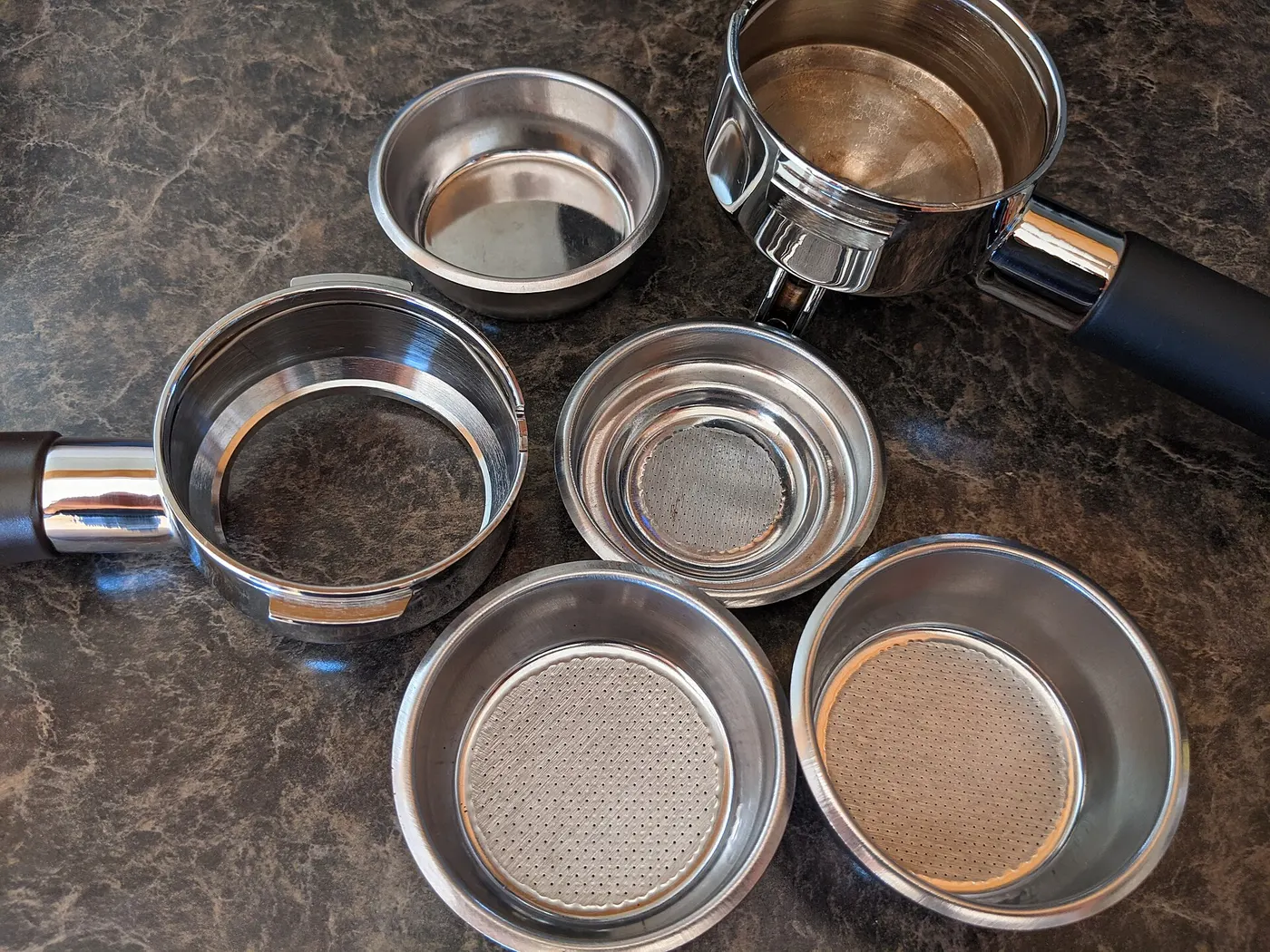
Scale is the main reason home machines die early, and the interval depends on your water, not on the calendar. A machine descaled every 3 months with a $9 bottle that covers 3 treatments costs about $12 a year. A water filter cartridge changed every 2 months at $7 is $42 a year — more than the electricity in the standby case above.
Those two together, on the figures in this paragraph, add about 7 cents to a cup at 2 cups a day. That is a third of the machine's share in the five-year column, and it is the number most buyers leave out entirely.
The consumable interval calculator takes your own interval and unit price, because a household on soft water and one on hard water are not running the same machine in any sense that matters to the pump.
Putting the four numbers together
On the example figures used throughout this guide — $700 machine kept 5 years, 2 cups a day, $18 bags at 18 g a double, 1,350 W with 12 hours of standby, descaler and filters as above — a home double comes to roughly $1.30: about 19 cents of machine, $1.00 of coffee, 3 cents of electricity and 7 cents of consumables.
Change one input at a time in the calculator and the ranking stays the same in almost every household: beans first, consumables and machine next, electricity last. A cheaper machine rarely rescues an expensive bean habit, and an expensive machine rarely ruins a cheap one.
Before you buy
- Write down the number of cups a day you will realistically pull, then divide the price by that number over five years before you compare two machines
- Check that gaskets, baskets and a pump are available as spare parts for the model you are considering
- Read the rated wattage from the machine's plate or manual and put it into the energy calculator with your own tariff
- Find your electricity rate on your own bill rather than using a national average
- Price one bag of the beans you would actually drink and divide by 18 g to get your true per-shot coffee cost
- Decide a descaling interval based on your water hardness and cost it for a year
Questions readers ask
- Is a capsule machine cheaper per cup?
- Usually not, on the coffee. A capsule holds roughly 5 to 6 g and commonly sells for 70 to 90 cents, which is $0.12 to $0.18 per gram of coffee. An $18 bag of 340 g is about $0.053 per gram. The capsule machine is cheaper to buy and more expensive to run, so the crossover depends on how many cups you pull: at 2 a day the bean gap is the dominant number within months.
- Does leaving the machine on all day shorten its life?
- It costs money in standby, as the table above shows, and it keeps the boiler at temperature, which accelerates scale formation in hard water. The practical answer is a timer or the machine's own auto-off, which gets you a warm group without 24 hours of heating.
- Should I count the grinder in the cost per cup?
- Yes, the same way as the machine: price divided by shots over the years you keep it. A $250 grinder over 5 years at 2 cups a day adds about 7 cents a cup. It belongs in the machine column, not the bean column.
Sources
- ENERGY STAR — certified product categories (no category for coffee makers or espresso machines) — checked 2026-11-03
- U.S. Energy Information Administration — Electric Power Monthly, average retail price of electricity by end-use sector — checked 2026-11-03
- Specialty Coffee Association — published equipment and brewing standards index — checked 2026-11-03
Some links on this site can earn us a commission. That does not change which product a guide recommends, and it adds nothing to your price. Advertising is not enabled on this site yet. When it is, ads will be labelled and kept visually separate from the guides.