How to choose
Choosing a home espresso setup without buying twice
The four decisions that decide whether a home espresso setup still gets used in year three: grinder first, serviceability, counter and plumbing reality, and milk.
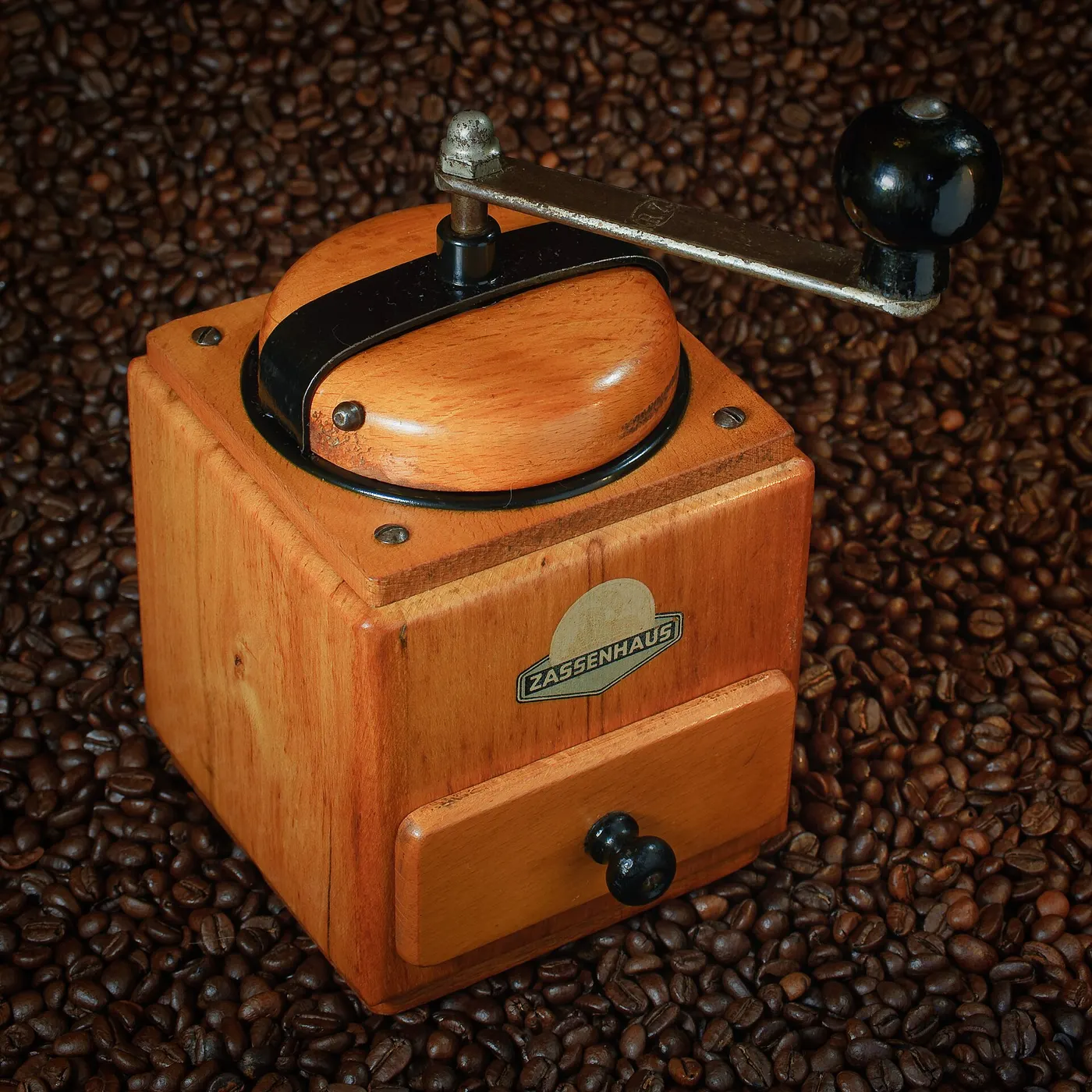
Almost every regretted espresso purchase is one of four mistakes: buying the machine before the grinder, buying a model with no spare parts, buying something that does not fit the counter or the water supply, and buying for milk drinks a machine cannot steam.
This guide takes them in that order. It is about the decision, not about model names: we have not tested machines and do not publish rankings.
Grinder first, and it is not close
An espresso machine applies pressure to whatever the grinder gives it. If the grind is inconsistent, water channels through the puck and no amount of pressure or temperature stability fixes the result. A $900 machine fed by a blade grinder makes worse coffee than a $400 machine fed by a decent burr grinder.
A practical split on a $900 total is about $350 to the grinder and $550 to the machine. On a $500 total it is about $200 and $300. Those are planning ratios rather than rules, and the point is only that the grinder share should be a third or more, not a tenth.
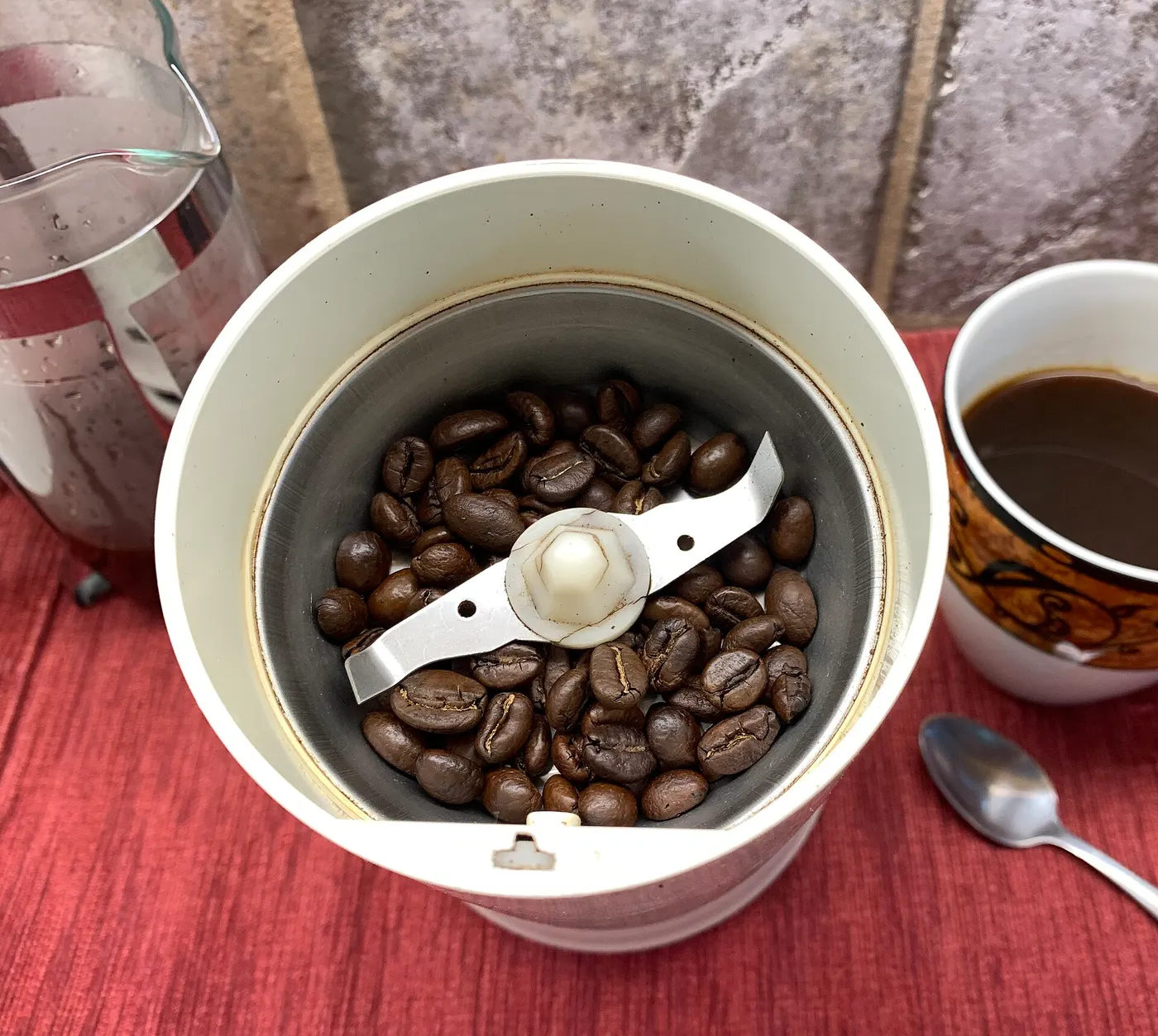
Blade grinders cut unevenly by design: they chop until you stop, producing dust and boulders in the same batch. Burr grinders set a gap and pass beans through it, which is why a burr set is the part worth paying for.
| Total budget | Grinder | Machine | Why |
|---|---|---|---|
| $500 | about $200 | about $300 | A consistent grind makes a simple machine usable |
| $900 | about $350 | about $550 | Room for a pump machine with serviceable parts |
| $1,800 | about $600 | about $1,200 | Temperature stability starts to be the limit, not grind |
These are allocations, not recommendations of particular products, and they assume you are buying both at once rather than upgrading over two years.
Serviceability decides the real price
A machine you can open is a machine you can keep. Three questions settle it: can you buy gaskets and a shower screen, is the pump a standard vibratory or rotary unit rather than a sealed assembly, and is the group a common size so that baskets and tampers exist.
The reason this matters is in the cost-per-cup arithmetic: a $700 machine kept 5 years costs about 19 cents a cup at 2 cups a day, and the same machine discarded at 18 months costs about 64 cents. Serviceability is the difference between those two numbers, and it is visible before you buy, in the parts list on the manufacturer's support site.
The Specialty Coffee Association publishes equipment standards for espresso machines and grinders. The standards themselves sit behind the association's documents rather than on the public index, but the existence of a published standard is a useful signal when a manufacturer references one.
- Find the model's parts page before buying and confirm gaskets and baskets are listed
- Check whether the boiler or thermoblock is replaceable or sealed into the chassis
- Confirm the group size so that baskets, tampers and distribution tools fit
- Look for a published service manual rather than only a quick-start leaflet
Counter, plumbing and water hardness
Measure the counter depth and the height to the underside of the wall cabinet before anything else, including the clearance you need to lift the water tank lid. A machine 14 inches tall with a top-filled tank needs more than 14 inches of space.
Hard water is the quiet killer. Scale forms inside the boiler and narrows the path water takes, and the usual result is a machine that brews cooler and slower before it fails. A filter cartridge changed every 2 months at $7 is $42 a year, and descaler every 3 months is about $12 a year: $54 of consumables to protect a $700 machine.
If your household has very hard water, a plumbed filter or a jug filter you actually refill is a better investment than a larger boiler.
Milk drinks change the specification
If most of what you drink has milk in it, steaming is not a side feature. A single-boiler machine heats for brewing and for steam in turn, which means a wait between the shot and the milk; a heat exchanger or dual boiler does both at once. On a $900 budget that choice usually costs more than the grinder split above saves.
For one or two milk drinks a day the wait is a minor annoyance. For four or more in a morning it is the reason the machine stops being used, which is the most expensive outcome of all.
A 12 oz pitcher and a thermometer cost very little and change the result more than most machine upgrades at this level.
Before you buy
- Set the total budget first, then allocate at least a third of it to the grinder
- Open the manufacturer's parts page and confirm gaskets, baskets and a shower screen are sold separately
- Measure counter depth, cabinet height and tank-lid clearance in inches before ordering
- Find out your water hardness and price a year of filters and descaler for the model you want
- Count the milk drinks you make in a typical morning and decide whether a single boiler can keep up
- Price the grinder, the machine, a scale and a pitcher as one purchase, not as an upgrade path
Questions readers ask
- Can I start with the machine and add a good grinder later?
- You can, and it is the most common way people end up spending twice. A pre-ground bag or a blade grinder will mask whatever the machine can do for the months in between, so the usual outcome is concluding the machine is disappointing and replacing it. If the budget only stretches one way at first, buy the grinder and brew by another method until the machine arrives.
- How much counter space do I actually need?
- Measure the machine's footprint plus about 4 inches behind it for the tank and plug, and check the height with the tank lid open rather than closed. Add a grinder footprint next to it, not in front of it, so you are not lifting the machine to use the grinder.
- Is a capsule machine a reasonable starting point?
- It is a reasonable way to find out how many coffees a day you really make, which is the number that drives every calculation on this site. It is a poor way to find out whether you want an espresso setup, because the variables you would be learning to control are the ones a capsule removes.
Sources
- Specialty Coffee Association — published equipment and brewing standards index — checked 2026-11-03
- ENERGY STAR — certified product categories (confirms no efficiency label exists for espresso machines) — checked 2026-11-03
- U.S. Consumer Product Safety Commission — consumer product safety information and recalls — checked 2026-11-03
Some links on this site can earn us a commission. That does not change which product a guide recommends, and it adds nothing to your price. Advertising is not enabled on this site yet. When it is, ads will be labelled and kept visually separate from the guides.